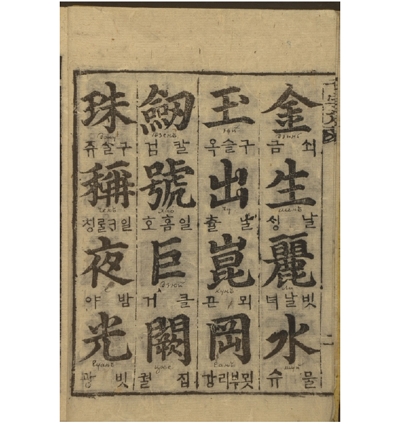
The aim of this study was to establish the origin of Korean books from the so-called “Brosset Collection” kept at the Institute of Oriental Manuscripts of the Russian Academy of Sciences (Asiatic Museum). The “Brosset Collection” is a conventional name for the books which are mentioned in the handwritten catalogue of the Asiatic Museum’s Far Eastern collection compiled by Academician Marie-Félicité Brosset (1802–1880). This catalogue lists nine identifiable Korean texts, eight of which are written entirely or partially in Hanmun.1 Judging by the date of their cataloguing (1840 and 1842), they are most likely the first Korean books to appear in Russia and are among the earliest surviving Korean-printed books held in European scholarly institutions. The study includes analysis of the various archival documents and marginalia in the books themselves. As a result, it was proven that most of these books form a single collection that originally came from the library of Baron Paul Schilling (1786–1837), who probably received them from the sinologist Nikita Iakovlevich Bichurin (Archimandrite Hyacinth; 1777–1853), head of the Ninth Russian Spiritual Mission in Beijing, and one book originated from the collection of Manchu studies scholar Stepan Vasil’evich Lipovtsov (1770–1841)
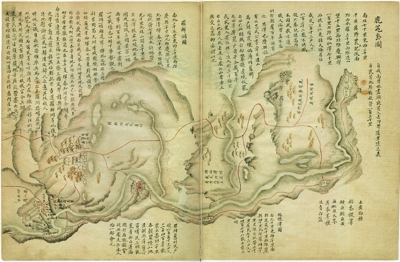
Aguk Yeojido 俄國輿地圖 (“Map of Russia”) is a rare late-nineteenth-century Korean manuscript of considerable significance for understanding border interactions among Russia, Korea, and China, as well as the early history of Korean settlement in the Russian Far East. Produced at a time when the Joseon court sought alternatives to Chinese suzerainty, Japanese expansion, and Western pressure, the map reveals Korea’s strategic engagement with shifting imperial frontiers. This study interprets the manuscript through the lens of critical cartography, treating it not as a neutral geographic record but as an ideological instrument of statecraft and intelligence. By combining close reading of its cartographic and textual elements with a historical-philological methodology – cross-referencing annotations against newly identified archival materials from Japan and Taiwan – the analysis demonstrates that the map was compiled between 1883 and 1886, most plausibly by Kim Gwanghun and Sin Seonuk. Functioning as a hybrid cartographic–textual genre, the Aguk Yeojido recorded military installations, border conditions, and Korean settlements in the Primorskii Region, while simultaneously conceptualizing Russia as a strategic counterweight in Korea’s evolving foreign policy. Ultimately, the manuscript exemplifies how late Joseon cartography operated as a dynamic tool of geopolitical negotiation and intelligence gathering.
The second half of the nineteenth century became a time of many dramatic events on the Korean peninsula. With opening the country to trade and diplomacy with Westernized (Japan) or Western (USA, France, Great Britain) countries led to a division within Korean society, since the 1880s Chosŏn (Korea) has entered the age of political and social turmoil. Several fractions, supporting different diplomatic approaches, guided by influential political figures, were formed at the Korean court. It is their constant clashes that can be partly blamed for the inconsistency of Chosŏn’s diplomatic and political course at that time.
In light of the above, it is noticeable that, rather than stressing Kojong’s authority or hinting at the political influence of Hŭngsŏn Taewŏn’gun, the Russian-language part of Korean studies academy is generally paying attention to the Queen, labeling her as the main figure who guided the state policy from the shadow of her husband’s back. In the Russian analytical literature, Queen Min, also being the head of the influential Min-clan, is responsible for seizing power by removing Taewŏn’gun from office; requesting China’s military support to solve the Imo incident of 1882; being involved in appealing to China in 1894 for suppressing the peasant uprising that had brought up the Sino-Japanese War (1894-1895); and generally guiding Chosŏn’s diplomacy throughout 1880s and 1890s, ensuring the country’s rapport with China, the United States, and, later, with Russia. Finally, by Russian-speaking scholars, it was Queen Min’s firm resistance to Japan’s involvement in Korean state affairs in the mid-1890s that ultimately brought her assassination in October 1895.
This paints a vivid picture of Queen Min as one of the most influential politicians of her time, which stays unchallenged and largely unexplained in the Russian-language part of Korean studies academia. This paper is an attempt to shed some light on the roots of this analytical concept. The authors will attempt to outline Queen Min’s assessments present in Russian academia and trace their original source. A critical analysis of these evaluations will also be performed with the aim of revealing the true historical role that Queen Min played in Chosŏn politics and diplomacy in the late nineteenth century.
To achieve these goals, the authors will carry out an analysis of narratives regarding Queen Min and her political role, present in publications of Russian-language scholars (such Tatiana Simbirtseva, Oleg Kurbanov, Vladimir Tikhonov), comparing them to available primary sources (for instance, Kojong Sillok, Queen Min’s diary of 1882, Yun Chi Ho’s diary, memoirs of Lilias Horton Underwood and other) and narratives, present in relevant publications of scholars from English-speaking part of an academia.
In this article, for the first time in Russian Oriental studies, a comprehensive reconstruction of biographies of Mongol military commanders who led campaigns against the state of Koryŏ in 1218–1260 is undertaken. Noting that the general chronology of the military campaigns of this period has been covered in considerable detail in world historiography, the author aims to fill the gap concerning the identities of these commanders, their origins, and their place within the military hierarchy. The source base of the study comprises Korean and Chiŏnese chronicles and historical works: Koryŏsa, Koryŏsa chŏryo, Tongguk pyŏnggam, Yuán shǐ, Yuán shǐ shìzú biǎo, Wén Tíngshì’s Yuán Gāolíjìshì, Kē Shàomín’s Xīn Yuán shǐ, and Huáng yuánshèng wǔ qīnzhēng lù, as well as The Secret History of the Mongols and works of Rashīd al-Dīn and Juvaynī. As a result of a comparative analysis of the source texts and their collation with existing historiographical literature in Russian, English, Korean, and Chinese, the biographies of ten military commanders, who successively or simultaneously led incursions onto the Korean Peninsula, have been reconstructed with varying degrees of reliability: Qachi’un, Saritai, Púlǐ Dàiwán, Tege-Qorči (Díjù), Tangut, Amuqan, Yěgū, Čelodai, Fuboda, and Yesuder. All of them held high command positions, ranging from leaders of embassies and major military campaigns to commanders of thousand-strong units who participated in negotiations. Among other findings, their heterogeneous ethnic composition was revealed: among them were representatives of the Genghisid lineage, the Jürchen nobility, and individuals from various Mongol tribes. The collected information can fill the lacuna regarding the individuals who determined the course of Koryŏ history in the 13th century and make a new contribution to the study of the early stage of Mongol-Koryŏ relations.
In the first half of the 8th century, a Korean monk named Hyech’o (704?-787 CE) went on a pilgrimage to India. It was not the first time a monk originating from the Korean Peninsula travelled to India; before Hyech’o, several Korean monks went to the border of the oecumene. The only survived travelogue of a Korean monk visited India is the one by Hyech’o, Memoirs of a Pilgrimage to the Five Indian Kingdoms (往五天竺國傳). The preserved manuscript was found in Mogao caves by Paul Pelliot (1878-1945) and is held in the French National Library. There are two translations of the travelogue into English; however, none of them study stylistic features of the text, nor are travelogue’s lexicon features researched, whereas Hyech’o’s travelogue has distinctive style and does not follow standard Buddhist travelogue structure.
This paper shows preliminary results of a research which aims to study composition, lexical and stylistic features of the travelogue compared to notes of Xuanzang (Records of the Western Regions, 大唐西域記). The study is qualitative research. Comparative method was applied to check the structure and toponym differences in Hyech’o’s text and Records of the Western Regions. Literary analysis is used to identify lexical features of the travelogue, to understand if Hyech’o uses specific phrases for introducing a new place he visits. Hyech’o, compared to other renowned Chinese pilgrims, is quite frank with the reader, especially in his poems, each of which shares Hyech’o’s emotions. Hyech’o, being of Korean origin, might have left unique lexical and stylistic characteristics in the travelogue.
This article seeks to redefine the Kim Pusik’s 金富軾 (1075-1151) Samguk sagi 三國史記 (Histories of the Three Kingdoms) as a more imaginative and literary text by foregrounding its “supernatural” elements (collectively referred to as “wonder tales”), rather than emphasizing the ‘Confucian’ orientation that has conventionally been prescribed to it. It reviews the extend of incorporation of “wonder tales” into the historiographical content of Samguk sagi and outlines the connections between their literary essence and structural functions. The references to extraordinary are typified and distributed by six groups whose attributes are both contextual and functional: the subject matter itself (what is told, in which circumstances the matter is referred to) and assumed level of its compliance with the norms of Confucian historiographical accountability (trustworthiness). These references are analyzed contextually with illustrative references to the Chinese ‘normative histories’ principles. Then the political and structural functions of mystical motifs in the Histories of the Three Kingdoms are deducted and explained. Finally tentative conclusions are offered on the principles of choice of “wonder stories” for the historical narration in the Samguk sagi and their functions as ‘special historiographical elements’ are discussed.
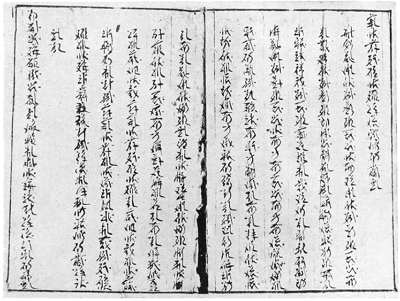
Tangut culture, which seemed almost completely lost a little bit more than a century ago, is now well available for study thanks to unbelievable finds of Pёtr Kozlov in so called “dead city” of Khara-Khoto, in the plain Alashan Gobi Desert. One of the important questions about Tangut is a level of impressions, which was made on them by neighbor cultures – especially Chinese. We would try to say something about that subject, studying the case of the place in Tangut state which took on of Confucian canons – but rather a particular one – Xiao jing 孝經 (Canon of [Descendants] Piety).



 News
News First
First Prev
Prev