This article serves as a preliminary study for a larger project on developing Literary Sinitic textbooks for Anglophone learners. It examines major Literary Sinitic textbooks published for use in Korean universities since the twentieth century, focusing on three aspects: the definition and scope of Literary Sinitic, pedagogical approaches, and the selection of texts. The study shows that Korean university textbooks generally present Literary Sinitic as both an integral part of Korean literary tradition and a shared classical language of the Sinosphere. They also place considerable emphasis on systematic grammatical instruction while recognizing the limitations of grammar-centered pedagogy. In addition, some textbooks employ pedagogical strategies such as diagramming methods and practice exercises to promote active learner engagement. With regard to text selection, they seek to balance representative works with broader educational objectives, although further diversification remains desirable. Based on these findings, this article argues that future textbooks for Anglophone learners should provide a clear explanation of the concept and scope of Literary Sinitic, adopt a balanced approach to grammatical instruction, and diversify their selection of texts in light of recent scholarship and the needs of Korean Studies. It is hoped that these observations will contribute to the development of more effective Korean Literary Sinitic teaching materials for Anglophone learners.
This study examines how the social status of Hanja 漢字 “Sino-Korean characters” and Hanmun 漢文 “Literary Sinitic” has changed within the history of knowledge formation in Korea, focusing on three interrelated layers: shifts in episteme, the reconfiguration of knowledge baselines, and transformations in curriculum discourse. Hanja and Hanmun were marginalized in the context of modern nationstate language policy and the establishment of disciplinary academic systems, but this did not immediately entail the disappearance of their educational value. Rather, Hanja education came to be assigned new goals, such as deepening vocabulary and literacy, facilitating access to historical texts, and cultivating an understanding of the shared written culture of East Asia. At the same time, the ways in which each country and region evaluated and authorized “valuable” knowledge became a key factor in reshaping the respective status of Hanja and Hanmun.
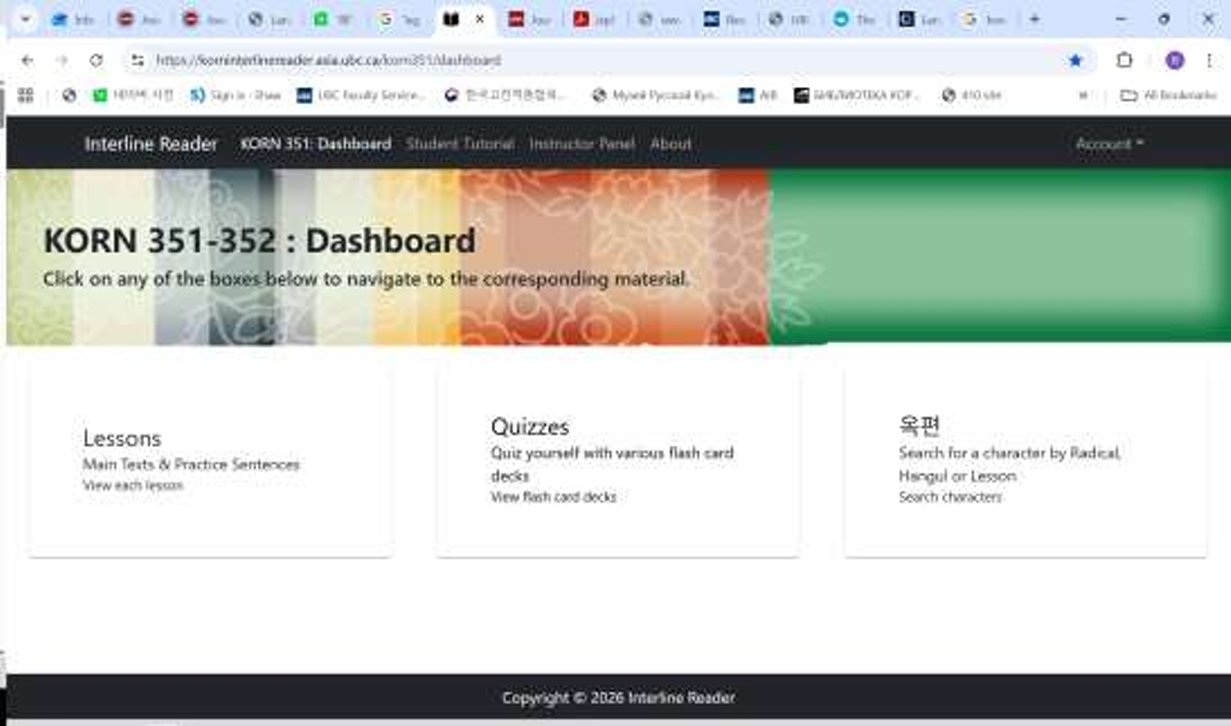
In the context of a special issue on education outside Korea, this paper surveys the current status of sinograph education in Korean Language Education (KLE) for foreigners, and finds that there is a dearth of both research on and teaching materials for hancha kyoyuk. Hence the “First Things First” in the title: we can hardly expect to make progress in hanmun education when so little exists in the way of resources for and courses in sinograph education—the single most basic prerequisite for teaching hanmun. After suggesting a number of reasons for the current lamentable neglect of hancha education, the paper draws some illustrative comparisons with sinograph education in Japanese Language Education and Chinese Language Education before rehearsing a number of compelling justifications for including a robust hancha education component in KLE (whether for Koreans or foreign learners of Korean). The remainder of the paper introduces the pedagogical ideology and methodology behind the Advanced Korean: Sino-Korean Companion textbook and its companion online resource, the UBC Interline Reader.

 News
News First
First Prev
Prev