Abstract
A Sino-Korean literature textbook for English-speaking college students, currently under development, should aim to highlight the unique characteristics of the history of Sino-Korean literature, offering distinct value compared to previous textbooks that primarily focus on Chinese classics. This paper outlines the design of a curriculum for teaching ‘Korean-style’ Sinographic literature in a single chapter of the new textbook, which was developed to address the mismatches between literary Chinese and vernacular Korean. The proposed curriculum is divided into two parts, each with three sections, and is designed to systematically convey the history, scope, and grammatical features of ‘Korean-style’ Sinographic literature. Part I addresses the historical context of Korean literature and examines how to define and delineate the boundaries of ‘Korean-style’ Sinographic literature. This part includes: Section 1, an explanation of the linguistic reasons behind the invention of ‘Korean-style’ Sinographic literature; Section 2, an overview of the historical development of ‘Korean-style’ Sinographic literature; Section 3, a justification for selecting Idu as a representative style among other Korean Sinographic writing systems. Part II focuses on approaches for teaching the grammatical elements of Idu and incorporating textual examples that demonstrate its practical usage. This part includes: Section 4, an introduction to the basic elements of Idu; Section 5, an analysis of the grammatical structure of Idu; Section 6, textual examples illustrating the use of Idu in historical contexts.
-
Keywords: Sino-Korean literature, Korean-style Sinographic literature, Idu, Hyangch'al, Kugyŏl, Wasaogan
Introduction: The Distinct Characteristics and Difficulties of Teaching ‘Korean-Style’ Sinographic Literature
Since the early dispatch of missionaries to China and the establishment of Sinology as a modern academic discipline, the methodology for teaching Sinographic literature (Classical/Literary Chinese) has been widely debated in the West, resulting in numerous high-quality college textbooks. Within this context, it is crucial to delineate the unique characteristics of Korean literary history as distinct from Chinese literature, the traditional progenitor of Sinographic writing. One pedagogical approach involves introducing masterpieces that reflect the specific emotions and historical experiences of the Korean people. Another approach should focuse on ‘Korean-style’ Sinographic literature, which was established and modified by the influence of the Korean language.
2 This paper focuses on the latter, discussing a curriculum specifically designed for ‘Korean-style’ Sinographic literature.
On October 22, 2024, the Korea University Institute for Sinographic Literatures and Philology and the MIT Comparative Global Humanities Initiative jointly hosted a workshop at the Massachusetts Institute of Technology. The session focused on the design of a handbook and a textbook for Sino-Korean literature (Sinographic works by Korean authors), during which participants examined existing textbook structures and potential content from various perspectives. This paper, stemming from those discussions, explores the development of a specific chapter for the upcoming textbook. The proposed curriculum for ‘Korean-style’ Sinographic literature is premised on the student having received sufficient training in ‘orthodox’ Sinographic literature (standard classics) in the textbook’s preceding chapters. The primary objective of this chapter is to broaden the student’s understanding of Korean literary history by highlighting the distinct characteristics of the ‘Korean-style’ Sinographic tradition.
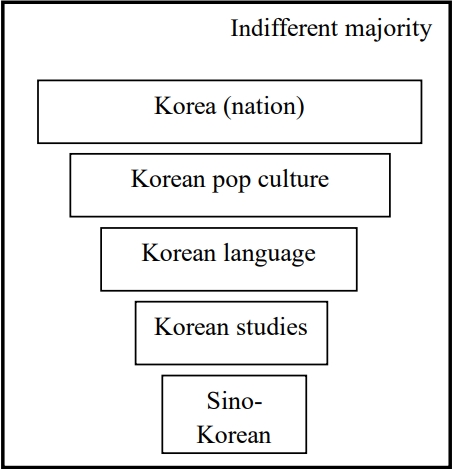
To effectively teach Sino-Korean literature, one must first understand the unique disciplinary position it occupies. A useful analogy can be drawn from the field of business administration: the concept of the ‘marketing funnel.’ This model illustrates that the number of actual purchasers—those who have navigated various stages of consideration—is significantly smaller than the initial pool of potential customers who simply recognize a product. As researchers and educators tasked with ‘selling’ Sino-Korean literature to a wider audience, we can apply this funnel model to the way we design and implement Korean studies curricula.
Numerous public and private surveys indicate that Korean popular culture—widely known as the ‘Korean Wave’—is the primary driver of international interest in Korea.
3 In terms of accessibility and recognition, the influence of pop culture is unparalleled. Aside from established scholars who often transition into the field from Chinese or Japanese studies, it is unrealistic to expect an average college student to discover Pyŏn Kyeryang 卞季良(1369-1430) before BTS. It is far more natural to envision a progression where an initial interest in pop culture motivates a student to learn the Korean language, which then serves as a gateway to specialized Korean studies.
However, Sino-Korean literature requires rigorous training in the Sinographic writing system and a profound understanding of pre-modern East Asian literature, history, and philosophy, making it the least accessible discipline within the field. While concrete statistics are scarce, Korean universities clearly exhibit a ‘funnel’ effect regarding graduate students; enrollment dwindles in a sequence from Korean language education to modern literature, then to pre-modern literature, and finally to Sinographic literature. Currently, most universities lack dedicated departments for Sinographic literature, and specialists within Korean Language and Literature departments are increasingly rare.
Nonetheless, the steady increase in interest in Korea at the university level is encouraging. In 2002, only 5,211 students were enrolled in Korean language courses at institutions of higher education in the United States.
4 By 2021, that number had surged to 19,270, ranking Korean among the top ten most-studied foreign languages.
5 While 2003 statistics from the California State University system showed that heritage learners accounted for 90% of Korean language enrollment,
6 it is reasonable to infer that the nearly fourfold increase since then has been driven primarily by non-heritage learners. Given this trajectory, we can expect a corresponding rise in the number of students pursuing Korean studies—and more specifically, Korean classics—as their proficiency and interest in the language deepen. Indeed, this shift is already visible; in 2024, I taught an exchange student from Spain in my Korean Philology and Book History course, a subject traditionally considered highly specialized.
While a vast amount of research has been published on teaching Korean as a foreign language (KFL), the curriculum for Sino-Korean literature—and specifically ‘Koreanstyle’ Sinographic literature—remains largely unexplored.
7 The inherent nature of this discipline makes it difficult to adopt the methodologies used in general Korean language instruction, which typically prioritize communicative proficiency and participatory activities. In my own training for ‘Korean-style’ Sinographic literature, I did not use a formal textbook; instead, I spent over three years deciphering primary source documents from
Yangban clan collections, learning to navigate cursive scripts and
Idu through direct immersion. This approach mirrors the traditional method of using canonical texts as the sole instructional tool for Sinographic literature. However, such a method is highly inefficient for international students, who often lack a foundational knowledge of
Hanja, the mechanics of Sinographic writing systems, and the broader historical context of Korean studies.
Given these circumstances, this paper proposes a structured textbook chapter for ‘Korean-style’ Sinographic literature and outlines its framework as follows:
|
Textbook Chapter: ‘Korean-Style’ Sinographic Literature |
Part I: Context |
Section 1: The Motivation for Recording Vernacular Korean Using Chinese Characters and the Characteristics of ‘Korean-Style’ Sinographic Literature |
|
Section 2: The Historical Development of ‘Korean-Style’ Sinographic Writing Systems |
|
Section 3: The Significance of Idu among ‘Korean-Style’ Writing Systems |
|
Part II: Grammar |
Section 4: The Basic Elements of Idu
|
|
Section 5: A Survey of the Grammatical Structure of Idu
|
|
Section 6: Idu in the Everyday Life of the Chosŏn |
The first chapter of this paper, which addresses ‘Part I’ of the textbook chapter, examines how to define ‘Korean-style’ Sinographic literature and establishes its pedagogical scope within the literary-historical context of Korea. The second chapter, discussing ‘Part II,’ explores how to explain grammatical elements and utilize illustrative texts to teach the Idu script, the quintessential writing system of the ‘Korean-style’ Sinographic tradition.
What to Teach: Establishing the Pedagogical Scope and Historical Context of ‘Korean-Style’ Sinographic Literature
Scholars of Sinographic literature recognize a distinct ‘Korean-style’ that diverges from the standard Sinographic traditions developed throughout Chinese literary history, such as the archaic Qin-Han style or the Tang-Song style. This ‘Korean-style’ is a hybrid system designed to accommodate vernacular Korean pronunciation, indigenous vocabulary, and native grammatical structures.
8 While a dedicated curriculum is required to fully explain its dynamic development, such an undertaking is often unrealistic given the time required for mastery and the heavy burden it places on both instructors and students. Instead, this paper proposes that a specific chapter be integrated into the broader Sino-Korean literature curriculum. To implement this, the pedagogical scope of the ‘Korean-style’ must be clearly defined and its limitations justified.
This chapter outlines the structure of ‘Part I’ of the proposed textbook, which primarily establishes the historical context of ‘Korean-style’ Sinographic literature. ‘Part I’ is divided into three sections. The first section serves as an introduction to the entire curriculum, examining the historical and linguistic factors that drove the development of this style. The second section traces its historical evolution, providing clear definitions for the various sub-styles within the ‘Korean-style’ Sinographic system. The third section justifies the textbook’s focus on the Idu script as the central pedagogical theme among these various sub-styles. Ultimately, ‘Part I’ is designed to provide students with a foundational understanding of ‘Korean-style’ Sinographic literature and provide learning objectives.
Section 1: Factors Behind the Emergence of ‘Korean-Style’ Sinographic Literature and Its Key Features
The impetus for the development of ‘Korean-style’ Sinographic literature mirrors the motivation behind the invention of
Hangeul: the fundamental linguistic mismatch between the vernacular Korean language and the Chinese writing system. To render spoken Korean using
Hanja—a script originally designed to represent the Chinese language—three primary challenges had to be addressed. First, how to transcribe indigenous Korean vocabulary. Second, how to denote Korean grammatical elements, such as postpositions and inflections. Third, how to arrange these characters to reflect Korean sentence structure (syntax), which differs significantly from that of Chinese.
9
As previously stated, Section 1 serves as the introduction to the curriculum. This section aims to address the three aforementioned questions, enabling students to comprehend the definition, characteristics, and historical context of ‘Korean-style’ Sinographic literature. For the purposes of this paper, the discussion regarding the first challenge—indigenous Korean vocabulary—will be deferred. The second challenge concerns the typological distinction between Chinese, an isolating language, and Korean, an agglutinative language that relies on combinations of word stems and affixes to express grammatical inflections. The following example illustrates this concept.
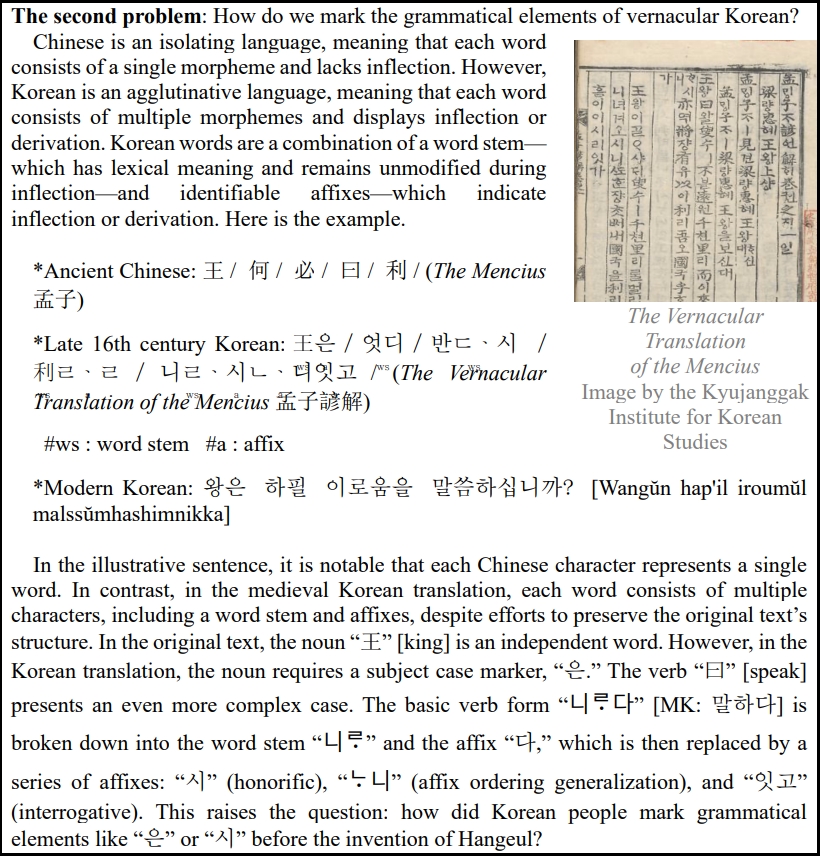
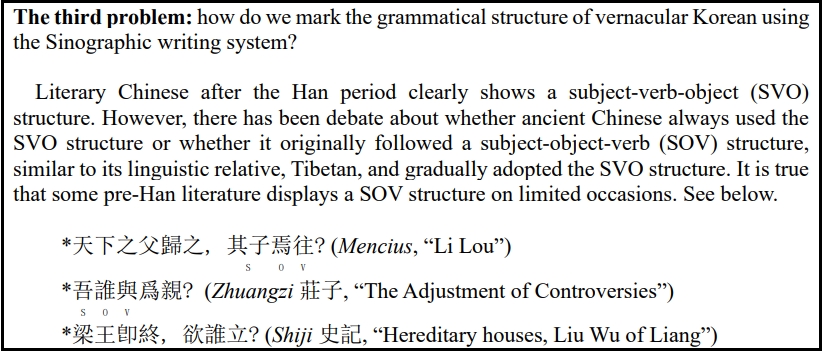
The third challenge requires a more sophisticated explanation. Generally, Chinese is described as having a Subject-Verb-Object (SVO) structure, while Korean follows a Subject-Object-Verb (SOV) structure. However, in oracle bone script, bronze inscriptions, and pre-Han written sources—from a period when the written and vernacular languages were not yet fully distinct—SOV patterns are observed in Chinese, particularly in interrogative sentences. Some scholars, primarily in Chinese academia, argue that ancient Chinese treated SVO as the ‘orthodox’ structure just as modern Chinese does. Others, mainly outside of China, contend that ancient Chinese originally possessed an SOV structure similar to its sister language, Tibetan, and only later transitioned to SVO.
10
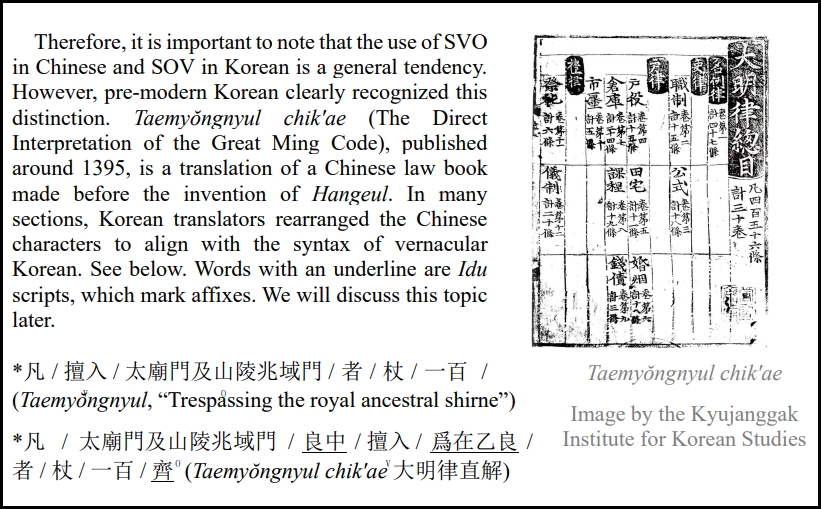
For the purposes of the textbook, it is unnecessary to settle these academic debates. Instead, the curriculum should emphasize that the contemporary users of ‘Koreanstyle’ Sinographic literature were clearly aware of the structural difference between SVO and SOV. Evidence for this can be found in the
Taemyŏngnyul chik'ae (大明律直解; The Direct Interpretation of the Great Ming Code). Many entries in this text show a deliberate restructuring of the original Ming Code’s SVO sentences into an SOV format.
11 This modification demonstrates that a clear conceptual distinction between SVO and SOV structures already existed by the 14th century, when the
Taemyŏngnyul chik'ae was likely published. By utilizing such primary sources to substantiate examples, the curriculum can effectively introduce the essential characteristics of the vernacular Korean and ‘Korean-style’ Sinographic systems while acknowledging key academic discourse.
This section provides a diachronic account of the historical development of various sub-styles of ‘Korean-style’ Sinographic literature, establishing a rationale for the pedagogical scope of the curriculum.
The existing Korean textbook provides a detailed account of the historical development of ‘Korean-style’ Sinographic literature.
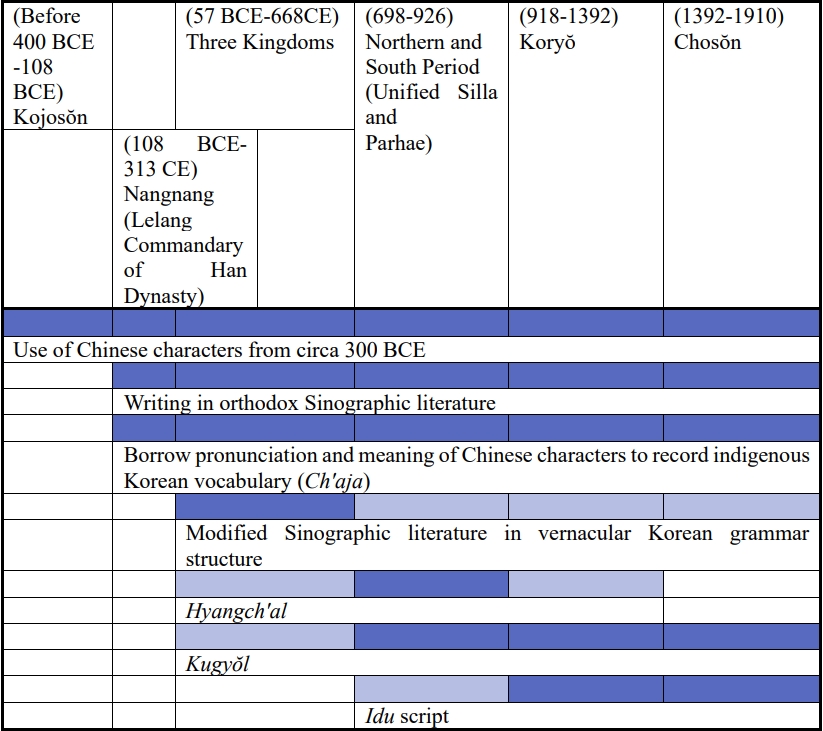
12 Based on this work, newly planned textbook for Anglo-American learners aims to outline specific sub-styles while explaining their periods of usage and subsequent transitions. To enhance clarity, this section will feature a chronological table to visualize historical progression, supplemented by images of representative artifacts.
The following table provides a provisional overview of the usage dates for Chinese characters, orthodox Sinographic literature, and ‘Korean-style’ Sinographic literature. The final textbook will employ professional design tools to improve visual accessibility while maintaining academic rigor by carefully distinguishing between confirmed historical dates and estimated periods where philological or archaeological evidence remains unavailable.
This section is required to demonstrate the distinct characteristics of various ‘Korean-style’ writing systems using historically significant illustrative texts. It begins with the Imsin Sŏgisŏk 壬申誓記石 “Imsin Year Vow Stone”, an early example of Sinographs rearranged to follow Korean grammatical structure. To this end, the new textbook draws extensively from existing textbooks and reference books on these systems. For instance,
Han'guk Hanmun'gich'ohaksa (The History of the Fundamentals of Sino-Korean Literature) and
Idu Sajŏn (Idu Dictionary) provide detailed explanations of variant style literature.
13 Furthermore, within Korean linguistics,
Kugŏŭi Yŏksa (The History of the Korean Language) and
Kugŏ Munbŏpsa (The History of Korean Grammar) offer critical analyses of the grammatical elements of
Idu and
Kugyŏl.
14 In Western academia, Ross King’s detailed treatment of
Idu concepts and grammar provides invaluable insights for an Anglo-American audience, as it reflects a Western pedagogical perspective.
15 The following excerpt presents King’s definition and formal analysis of
Idu script.

As previously outlined, the new textbook provides a step-by-step account of the historical and linguistic development of these ‘Korean-style’ Sinographic systems. Upon reaching this stage, students will understand how pre-modern Koreans adapted Sinographs (Hanja) in diverse ways to record the Korean vernacular. Before proceeding to ‘Part II,’ which focuses on the full-scale demonstration of application of ‘Korean-style’ Sinographic literature, the final section of ‘Part I’ clarifies the rationale for selecting a specific sub-style. By doing so, it defines the curriculum’s scope and establishes clear pedagogical objectives.
While a specialized textbook dedicated to ‘Korean-style’ Sinographic literature could theoretically cover all sub-style variants, this paper proposes a curriculum for a single chapter within a broader textbook. Consequently, it is necessary to prioritize certain content to fit within this limited scope. Given these practical constraints, this paper identifies the Idu script as the primary focus for ‘Part II.’ To justify this selection, ‘Section 3’ presents both a ‘negative’ rationale (the reasons for excluding other substyles) and a ‘positive’ rationale (the unique literary and historical significance of Idu).
The ‘negative’ rationales for excluding sub-styles other than Idu from the curriculum are clear. First, the primitive forms of modified Sinographic writing that adopted Korean SOV syntax emerged during the early Three Kingdoms period—the formative era of Sinographic literature on the Korean Peninsula. This sub-system coexisted with orthodox Sinographic literature before eventually being absorbed into the Idu script. Second, philological evidence for Hyangch'al is scarce, and its decipherment remains a subject of intense academic debate. Third, Kugyŏl is not a system for full-scale composition; rather, it functions primarily as an auxiliary tool to facilitate the comprehension of existing Sinographic texts.
The ‘positive’ rationales for focusing on the
Idu script are rooted in its profound historical, cultural, and literary significance.
Idu was inextricably linked to the daily lives of the Korean people throughout the Koryŏ and Chosŏn periods. Its usage is widely documented in texts concerning politics, administration, economics, and social affairs. Given its role in administrative and legal contexts, individuals across all social strata either required a command of
Idu or had to employ intermediaries who did.
16 This ubiquity is best exemplified by
Kim Chi 金祇, the translator of the
Taemyŏngnyul chik'ae, who noted that because the Korean people were so accustomed to
Idu, its use was inevitable when translating the Ming Code.
17
Recent scholarship has highlighted the phenomenon of ‘diglossia’—the coexistence of universal Sinographic literature and local vernacular languages in pre-modern East Asia.
18 Moving beyond these established frameworks, the newer concepts of ‘multiglossia’ and ‘hyperglossia’ have been proposed to account for the various writing systems that coexisted across different social strata.
19 These terms emphasize a complex internal layering of scripts rather than a simple binary or spectrum. The
Idu script, which functioned as an intermediate system between Sinographic literature and
Hangeul and was utilized across all strata of pre-modern Korean society, clearly exemplifies this state of ‘multiglossia.’ Moreover,
Idu did not merely permeate Korean life for practical purposes; it also served as a tool for literary expression. It is therefore evident that a comprehensive understanding of pre-modern Korean culture requires a foundational knowledge of
Hangeul, Sinographs (
Hanja), and
Idu in their entirety.
What to Teach: Presenting Grammatical Elements and Illustrative Texts of ‘Korean-Style’ Sinographic Literature
While Part I established the literary-historical context and pedagogical scope of ‘Korean-style’ Sinographic literature, Part II provides a comprehensive analysis of the Idu script, the tradition’s most representative style. This part is also divided into three sections. The first introduces the fundamental principles of character borrowing (Ch'aja) and identifies frequently used characters, serving as an intro to the grammar curriculum. The second section details the methods for notating indigenous Korean vocabulary and grammatical inflections through Idu. Finally, the third section presents primary sources—ranging from economic documents to fables—as illustrative texts to examine the practical application of Idu in historical real-world contexts.
Section 4: Ch'aja Characters and the Formation of the Idu Script
This section represents the initial stage of the Idu curriculum. It explains the principles of phonetic and semantic borrowing of Sinographs—specifically, how their sounds and meanings were adapted to form the Idu script and its vocabulary. The textbook draws extensively from existing scholarship, including the Idu Sajŏn (Idu Dictionary), while utilizing the Idu Yongnye Sajŏn (Dictionary of Idu Examples) from the Academy of Korean Studies as its primary reference. As the Idu Yongnye Sajŏn documents a vast range of vocabulary and provides crucial insights into the structural principles of the script, it serves as a cornerstone for this section. An example of this resource is provided below.
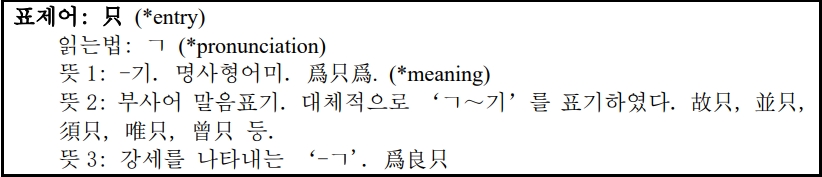
However, two challenges must be addressed when adapting the Idu Yongnye Sajŏn for the new textbook. First, the Idu Yongnye Sajŏn organizes its entries in Hangeul alphabetical order rather than by grammatical category. Consequently, it is more effective for the authors to curate a selection of fundamental Idu elements based on planning curriculum. The primary criteria for this selection should be frequency of use and grammatical significance. In addition to ‘只’ mentioned above, other highfrequency characters include ‘爲’, ‘以’, ‘是’, ‘良’, ‘矣’, ‘乎’, ‘段’, ‘如’ and ‘亦’. A curated list of twenty to thirty such characters should be sufficient to enable students to decipher the majority of college-level Idu vocabulary.
The transcription of pronunciation presents another challenge. I suggest that the new textbook adopt the McCune-Reischauer (MR) system, which has a long-standing history in Anglo-American academia, rather than the Revised Romanization (RR) system introduced by the Korean government more recently. However, while MR is superior for reflecting actual pronunciation, it also accounts for phonological shifts such as voicing and liaison. This causes a discrepancy between the notation of isolated Idu elements and their appearance within combined vocabulary. For instance, in MR, the initial consonant ‘ㄱ’ is transcribed as the unvoiced [k], whereas RR uses the voiced [g]. Regarding the Idu script, the element ‘去’ (modern Korean: 거) is transcribed as kŏ in the MR system. However, the affix ‘爲去乙’ is transcribed as hagŏnŭl in corresponding MR. Such inconsistencies between element-level and word-level notation must be carefully managed when utilizing the McCune-Reischauer system.
Section 5: The Grammar of the Idu Script
Following the previous section on the basic elements of Idu, this section examines Idu vocabulary. Generally, Idu vocabulary is categorized into native Korean nouns—such as pun'git (分衿; distribution of assets) and tyegim (題音/題辭; administrative verdicts)—and functional morphemes, including grammatical suffixes and particles. To maintain a concise curriculum, I suggest explaining specific nouns individually in the footnotes of the illustrative texts in the final section. This allows the current section to focus exclusively on a systematic explanation of Idu grammar.
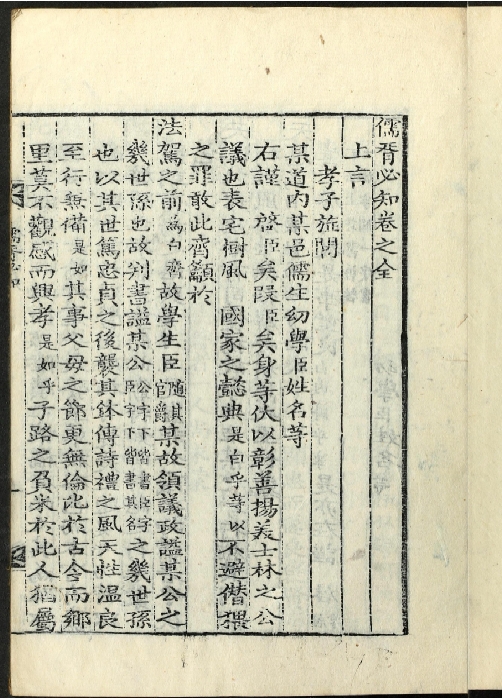
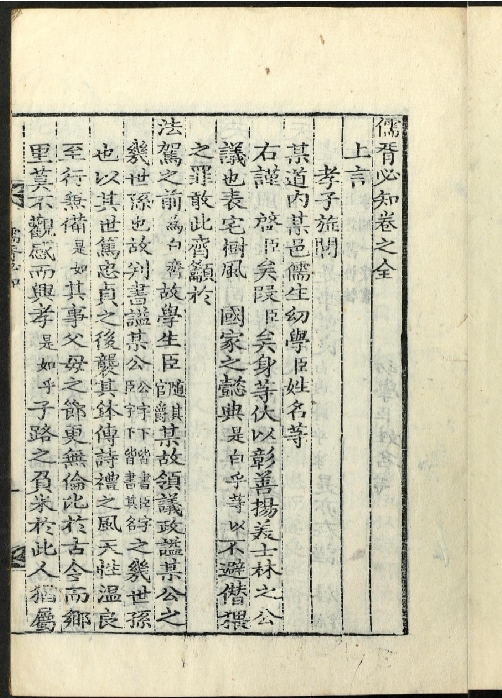
The Idu Sajŏn (Idu Dictionary), published by the Academy of Asian Studies at Dankook University, is a foundational reference for the study of Idu grammar. As the most recent and comprehensive compilation of Idu vocabulary, it boasts the largest collection of entries to date. The dictionary systematically documents Hangeul transcriptions and real-world usage from a vast array of historical sources—including Yusŏp'ilji (儒胥必知), the representative Idu manual of the late Chosŏn period—and provides rigorous grammatical analysis. Furthermore, the appendix includes lexical statistics derived from these extensive example texts. A new textbook chapter on ‘Korean-style’ Sinographic literature should ideally prioritize Idu terms based on their frequency of use, making the statistics in Idu Sajŏn an essential resource. The following example illustrates the dictionary’s method for explaining entries.
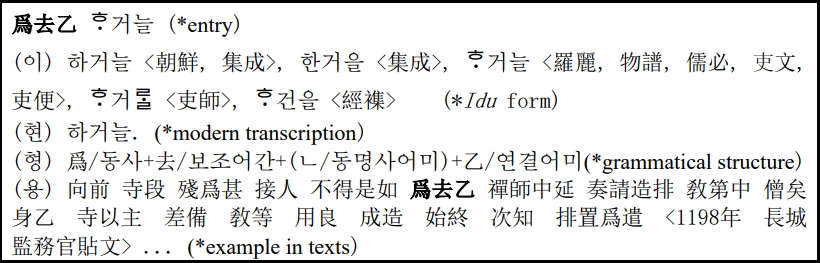
The ‘(형)’ (morphology) section of the Idu Sajŏn is particularly noteworthy for its analysis of grammatical structures. However, because the dictionary is organized alphabetically by Hangeul, it requires prior knowledge of Idu pronunciation to locate specific entries. To make Idu elements—such as pronunciation, structure, and meaning—more accessible to college-level learners, I suggest a different organizational approach for the new textbook. Vocabulary should be categorized by ‘head characters’ (root characters), with all derived forms listed alphabetically within each category. For example, the Idu term ‘爲去乙’ would be placed under the head character ‘爲’ (to do/be). This structure is illustrated below.
|
Head Character |
Idu Term |
Pronunciation |
Grammatical Structure |
Meaning |
|
爲 |
爲 |
하 |
爲 Verb |
To do |
|
[ha] |
|
하고 |
|
[hago] |
|
爲有臥乎所 |
하잇누온<오+ㄴ>바 |
爲 Verb |
What has been done |
|
[ha/it/nu/on<o+n>/pa] |
+有 Verb |
|
[Hainnuonba] |
+臥 Auxiliary stem |
|
+乎 Auxiliary stem) |
|
(+ㄴ Verbal noun suffix) |
|
+所 Bound noun |
|
爲遣 |
하고 |
爲 Verb |
After doing |
|
[ha/ko] |
+遣 Connective ending |
|
[hago] |
|
|
爲去乙 |
하거늘<ㄴ+을> |
爲 Verb |
Even though |
|
[Ha/kŏ/nŭl<n+ŭl>] |
+去 Auxiliary stem |
|
[Hagŏnŭl] |
(+ㄴ Verbal noun suffix) |
|
+乙 Connective ending |
|
... |
... |
... |
... |
As illustrated above, terms are organized alphabetically based on the character immediately following the head character. This arrangement is more user-friendly for look-ups than a system categorized by grammatical inflection. To address the pronunciation issues discussed in the previous section, both element-level and word-level transcriptions are provided; however, element-level pronunciation serves as the primary criterion for alphabetical order. The morphological analysis is based on the Idu Sajŏn, followed by a final explanation of the term’s meaning. As the character ‘爲’ is a foundational Idu verb with numerous significant derived forms, such high-frequency terms should be prioritized when selecting representative vocabulary for the curriculum.
Section 6: Documents, Literary Works, and Idu in Daily Life
The final section synthesizes previous lessons by allowing students to examine the application of Idu in primary sources. It features documents—the primary domain of the script—as well as Chosŏn-era fables that were specifically designed as pedagogical tools to teach complex administrative formats in a more engaging manner.
The Academy of Korean Studies categorizes historical documents into several types: Kyoryŏng-ryu 敎令類 “Royal Edicts”, Soch'a-kyejang-ryu 疏箚啓狀類 “Appeals and Reports”, Ch'ŏpkwan-t'ongbo-ryu 牒關通報類 “Administrative Communications”, Myŏngmun-mun'gi-ryu 明文文記類 “Contracts and Deeds”, Sŏgan-t'onggo-ryu 書簡通告類 “Letters and Notices”, Ch'ibu-kirok-ryu 置簿記錄類 “Ledgers and Records”, and Simun-ryu 詩文類 “Poetry and Prose”. More broadly, these can be divided into official documents—those concerning the sovereign or state administration—and private documents involving individuals, households, local communities, and educational institutions. As it is impossible to introduce the entire range of these documents within the curriculum, it is more effective to select one representative form from both the official and private categories to illustrate the daily lives of pre-modern Koreans.
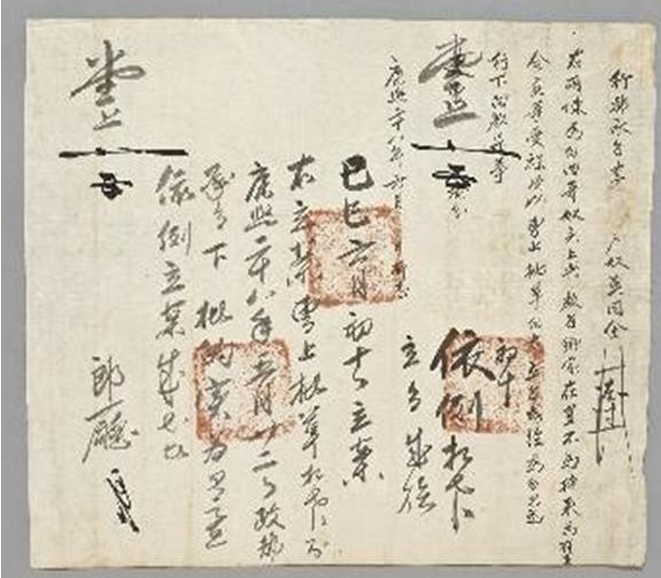
Regarding official documents, many forms—including edicts and diplomatic correspondence—were written in classical Sinographic literature. Idu-based documents such as Komok 告目 “reports” often consist of strictly formulaic and technical content, which can be too dry for a college curriculum. In contrast, Soji 所志 “petitions”, also known as Palgwal 白活 document legal disputes between people and administrative offices’ responds to them. These petitions provide a rich historical context and demonstrate the extensive use of the Idu script.
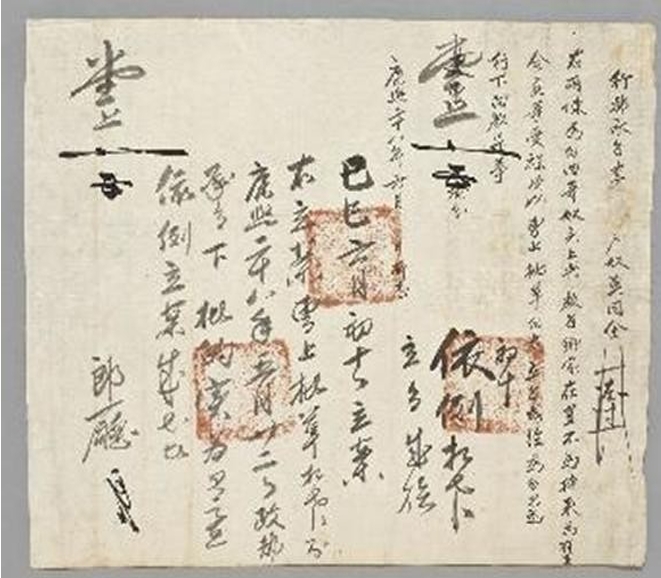
The image on the right is the “Yi Tammyŏng soji,” held by the Seoul Museum of History. Dated to approximately 1690, this
Soji was submitted to the
Ijo 吏曹 “Ministry of Personnel” by a
Hono 戶奴 “head servant” named
Maktongsoe 莫同金 on behalf of his master, Yi Tammyŏng 李聃命 “1646–1701”. According to the text, Yi had left his certificate of appointment for the position of
Tosŭngji 都承旨 “Chief Royal Secretary” in his hometown; the petition thus requests that the Ministry verify the official court registers and authorize his salary based on those records. In response, the Ministry’s
Ipchi 立旨 “a simplified authentication” was inscribed on the left side of the document to confirm the request. Although brief, the document clearly illustrates the structural formats of both
Soji and
Ipchi, demonstrating the administrative procedures of late 17th-century government offices. Most significantly, it highlights the role of the
Hono, proving that
Nobi 奴婢 in the Chosŏn dynasty possessed certain legal rights and that some were proficient in the
Idu script. Finally, it exemplifies the ‘multiglossia’ of Chosŏn society, where Sinograph,
Hangeul, and
Idu coexisted across various social strata.
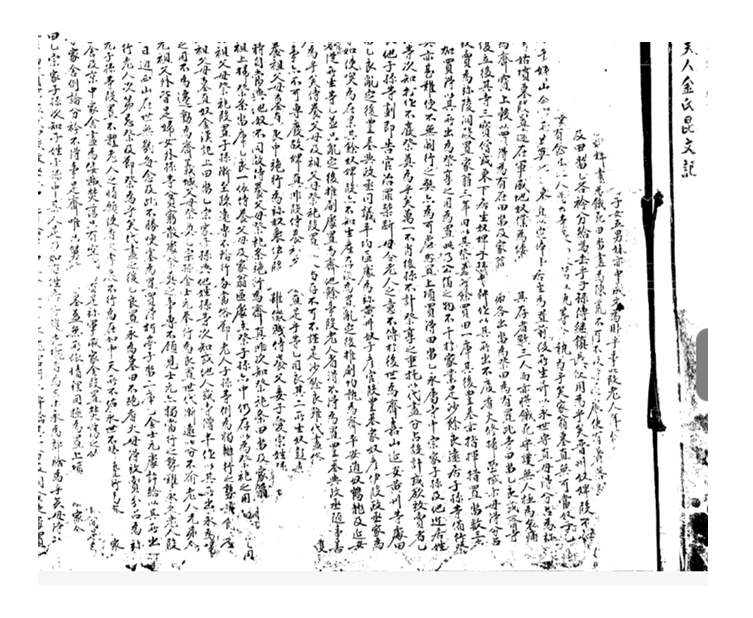
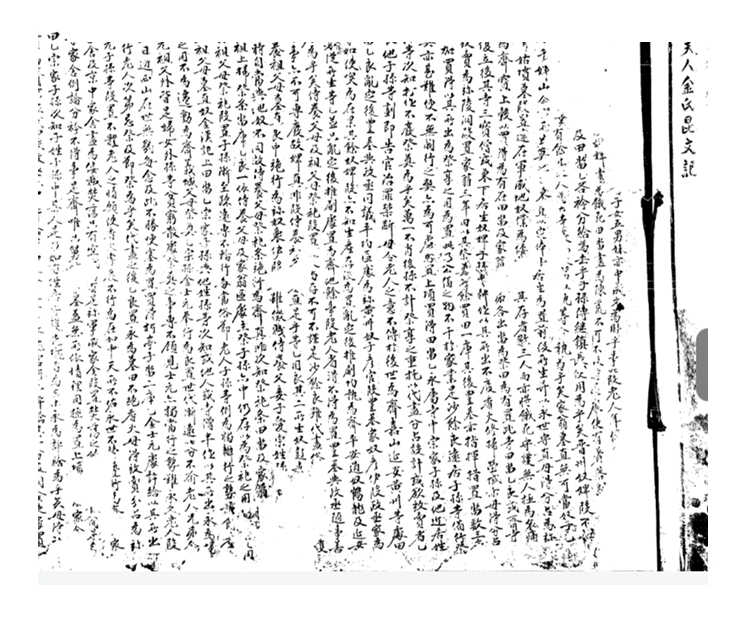
Regarding private documents, possible candidates for the curriculum include Myŏngmun 明文 “contracts for land and Nobi transactions” or Punjaegi 分財記 “inheritance records”, both of which illustrate the economic activities of the era. The image on the right is a Punjaegi—designated as Treasure No. 460-2—held by the Sŏae Head House in the UNESCO World Heritage site of Hahoe Village. It was drafted in 1594 by Lady Kim of Andong (titled “Chŏnggyŏngbuin”; the upper first rank) to notarize the distribution of property among her five children. Her second son was Ryu Sŏngnyong 柳成龍(1542–1607), the Prime Minister during the Imjin War. The insights this Punjaegi provides into the domestic economy of a prominent family, the mid-Chosŏn custom of equal inheritance for sons and daughters, and the economic devastation caused by the war make it a particularly compelling document. However, as the original has sustained damage over time, any textual omissions must be carefully reconstructed if it is to be featured in a textbook.
In addition to the primary documents discussed above, it would be effective to present entries from the manual
Yusŏp'ilji to allow for a comparison with the standardized formats of such documents. Published in the late 19th century,
Yusŏp'ilji illustrates the regulated administrative styles of the late-Chosŏn period, making it an excellent secondary reference for the curriculum.
Although their exact number remains unknown, fictional documents featuring animal protagonists were likely composed for various occasions. The National Library of Korea holds a manuscript titled
Yoram 要覽, which contains fictionalized documents such as
PiMyogŭmSoji 婢猫今所志 “The Petition of the Maidservant Cat”. The manuscript in my personal collection features insects and animals in similar roles. While these documents possess the characteristics of fables, they lack a full-scale narrative structure. In contrast,
Wasaogan 蛙蛇獄案 “The Case of the Frog and the Snake”—widely regarded as the only full-length
Idu work of fiction—boasts a complete narrative. In this story, a frog accuses a snake of murdering his son (a tadpole), leading to a formal investigation, an autopsy, and a trial. As the plot unfolds, the text presents
Idu documents that strictly follow real-world administrative formats. Such fictional works were likely composed by those proficient in the
Idu script, serving both as entertainment and as a practical means of pedagogical practice.
20
Utilizing “
Wasaogan” as an illustrative text for a new textbook on ‘Korean-style’ Sinographic literature offers several distinct advantages. The work provides a thorough narration of the Chosŏn administrative process in a murder case—from the initial accusation to the final verdict—while integrating authentic document formats into an engaging narrative.
21 In doing so, it highlights the unique characteristics of a work that blurs the boundary between law and literature.
22 Furthermore, “
Wasaogan” is already recognized in Western academia; although a complete English translation has yet to be published, existing research papers containing partial translations can serve as a valuable reference for the new curriculum.
23
Conclusion
The history of translating and teaching Sinographic literture in the English-speaking world has largely developed in tandem with the history of Sinology. Consequently, most widely used textbooks in the field are currently centered on the Chinese classics. Conversely, Sino-Korean literature has long been underrepresented in the classroom. Encouragingly, however, global interest in Korean culture has surged in recent years. Given this shift, the plan to compile a textbook on “Sino-Korean Literature” for university learners in the English-speaking world is highly timely, as it addresses the growing demand for more profound insights into Korean heritage. Furthermore, this initiative will serve as a foundation for expanding the scope of Korean Studies within the global academia.
This new textbook must distinguish itself from existing resources by highlighting the historical particularities of Sino-Korean literature. ‘Korean-style’ Sinographic literature—a system designed to bridge the gap between literary Chinese and the spoken Korean language—represents a unique development found only within the Korean tradition. This paper outlined a curriculum consisting of two parts and six sections, designed to provide a systematic and efficient framework for teaching this distinctive writing style.
Part I: Context
Section 1: Motivations for transcribing the Korean language via Sinographs and characteristics of ‘Korean-style’ Sinographic literature
Section 2: The historical development of ‘Korean-style’ writing systems
Section 3: The Significance of the Idu Script Within the ‘Korean-style’ Writing Tradition
Part II: Grammar
Section 4: Core Elements of the Idu Script
Section 5: Idu Grammar and Syntax
Section 6: Practical Applications of Idu in Chosŏn
In ‘Part I’, the curriculum defines “Korean-style” Sinographic literature within the historical context of Korean literature and establishes the scope of instruction.
‘Section 1’ serves as the introduction to the curriculum, clarifying the linguistic necessities that led to the development of ‘Korean-style’ Sinographic literature. To this end, it presents three primary rationales: first, the need to transcribe native Korean vocabulary; second, the requirement to denote the grammatical inflections of Korean as an agglutinative language; and third, the necessity of reconfiguring the word order from the SVO structure of Chinese to the SOV structure of Korean. It is suggested that referencing historical texts such as Taemyŏngnyul chik'ae will be highly effective as supplementary material.
‘Section 2’ utilizes a timeline to visualize the evolution and eventual decline of various writing systems—including primitive word-order rearrangement, Hyangch'al, Kugyŏl, and Idu—while explaining the unique characteristics of each.
‘Section 3’ acts as a bridge to formal grammatical instruction by providing clear justification for why, among the various systems, Idu is selected as the primary subject of learning. This section explains why Hyangch'al and Kugyŏl are less suitable for this curriculum. Simultaneously, it emphasizes Idu’s crucial role in Korean literary history by highlighting the historical context in which diverse social strata of Chosŏn society utilized Idu in their daily lives, forming a ‘multiglossia’ system.
Building on the background knowledge established in ‘Part I,’ ‘Part II’ explains the grammatical elements of Idu and examines its practical application through representative texts.
‘Section 4’ introduces the phonetic and semantic usage of the basic Sinographs that comprise Idu, along with their methods of composition. This section identifies highfrequency characters and seeks to establish a standardized English transcription system based on pronunciation.
‘Section 5’ systematically presents Idu vocabulary used to denote grammatical inflections. While drawing on the morphological analysis and definitions provided in the Idu Sajŏn, this section adopts an organizational structure suited to Western indexing conventions. Specifically, terms are categorized by their ‘head characters’—which carry the core meaning— and are arranged alphabetically according to their pronunciation.
‘Section 6’ utilizes actual Idu texts as illustrative examples to verify the practical usage of the vocabulary studied in ‘Section 5.’ For this purpose, three categories of representative texts are selected: official documents, private documents, and fiction. This paper proposes the following examples: the “Yi Tammyŏng Soji,” which proves that Idu was used extensively across all social strata, including the Nobi; the “Chŏnggyŏngbuin kimssi konmun'gi,” which illustrates the domestic economy of the mid-Chosŏn period; and “Wasaogan,” a representative Idu fable fiction.
Notes
“Yi Tammyŏng soji”
Image by the Seoul Museum of History
“Chŏnggyŏngbuin kimssi konmun'gi 貞敬夫人金氏昆文記”
Image by Academy of Korean Studies
The front page of Yusŏp'ilji
Image by Kyujanggak Institute for Korean Studies
Reference List
- Dankook University Academy of Asian Studies. Idu Sajŏn (Idu Dictionary). Yongin: Dankook University Press, 2020.
- Hong Jongseon. Kugŏ munbŏpsa (The History of Korean Grammar). Paju: Acanet, 2017.
- Yoo, Jamie Jungmin. “Hanja munhwagwŏn'gwa yangch'ŭng ŏnŏŭi munje (Sinographic Sphere and the Issue of “Diglossia” in East Asia).” The Society for Korean Language & Literary Research 47, no.2 (2019): 27-46.
- Jerry Norman. Chinese. Cambridge: Cambridge University Press, 1988.
- Jeung, Sun hee. “Wasaogan chakchago: mokt'aerimgwa kwallyŏnhayŏ (A Study on The Writer of Wasaokan).” The Research of the Korean Classic 6 (2000): 217-241.
- Kim Chi, trans. Taemyŏngnyul chik'ae 大明律直解 (The Direct Interpretation of the Great Ming Code). Possessed by Kyujanggak Institute for Korean Studies.
- Kim Moo Rim. Kugŏŭi Yŏksa (The History of the Korean Language). Seoul: Hankook Publishing House, 2004.
- Kim, Young-Su. “Iduwa iduhanmun pŏnyŏk koch'al (Idu Script and its Chinese Version).” Soonchunhyang Journal of Humanities 27 (2010): 87-107.
- Kim, Yupum. “han'gugŭi hanja ch'ajap'yogibŏbe taehan munjahakchŏk chomyŏnggwa kyoyuk panganŭi mosaek (A Graphonomical Consideration and Speculation on a Educational Plan for Chinese Character-Borrowing System in Korea).” The Journal for the Study of Humans and Culture 15 (2009): 147-172.
- Korean Foundation for International Cultural Exchange. 2024 Haeoehallyusilt'aejosa (2024 Overseas Hallyu Survey). Seoul: Korean Foundation for International Cultural Exchange, 2024.
- Kyojŏngch'ŏng. Maengja Ŏnhae 孟子諺解 (The Vernacular Translation of the Mencius). Possessed by Kyujanggak Institute for Korean Studies.
- Lee, Sun Hee. “Yanghan chŏnhu sigi kodae chunggugŏ ŏsun pyŏnhwae kwanhan sogo 1 (A Preliminary Study on Word Order Changes in Old Chinese During the Transition of the Two Han Dynasties 1).” Chinese Literature 44 (2005): 319-335.
- Modern Language Association. “Enrollments in Languages Other Than English in US Institutions of Higher Education, Fall 2021”. New York: Modern Language Association of America, 2023.
- Nam, Soon Hyeon. “Taehaksaengŭi hallyuinsikkwa kukkaimijiga yuhaksaeng suyonge mich'inŭn yŏnghyang: uwŏlgam maegaehyogwa (The Effect of Hallyu Perception and the Korean National Image on Acceptance of International Students among Korean University Students: Superiority as a Mediator).” Social Science Review 55 (2024): 1-18.
- King, Ross. “Ditching 'Diglossia': Describing Ecologies of the Spoken and Inscribed in Pre-modern Korea.” Sungkyun Journal of East Asian Studies 15 (2015): 1-19.
- Ross King. “Idu in and as Korean Literature”. The Routledge Companion to Korean Literature. New York: Routledge, 2022.
- Ross King. “Pungmi taehagŭi han'gugŏ han'gungmunhak kyoyuk hyŏnhwang (Current State of Korean Language and Literature Education in North American Universities). Haeoe Han'gukhak Paeksŏ. Seoul: Eulyoo Publishing, 2007.
- Sim, Kyungho. “Han'guk hanmunsanmunsa sŏsurŭi chemunje (On Description of Korean History of Literary Chinse Prose).” Journal of Korean Literature in Classical Chinese 64 (2016): 59-117.
- Sim, Kyungho. “Han'guk hanmunsanmunŭi sŏsulmunch'e mit susanolliwa yŏksamunhwajŏk kinŭng (A Comment on Narrative Style and Rhetorical Structureof Korean Sinitic Prose).” Journal of Korean Literature in Classical Chinese 87 (2023): 9-54.
- Sim Kyungho. “Kŭndae ijŏn han'gukhanmun sŏsa munch'eŭi chungch'ŭngsŏng (The Multi-layered Nature of Pre-modern Korean Sinographic Narrative Styles)”. International Conference Commemorating the 60th Anniversary of the Korea Comparative Literature Association. Keynote speech in 2019.12.7.
- Sim Kyungho. Han'guk Hanmun'gich'ohaksa (The History of the Fundamentals of Sino-Korean Literature). Seoul: Taehaksa, 2012.
- Park, Sohyeon. “A Court Case of Frog and Snake: Rereading Korean Court-Case Fiction from the Law and Literature Perspective.” Korea journal 59 (2019): 61-85.
- Unknown author. Yusŏp'ilji 儒胥必知 (The Essential Knowledges for Literati and Petty Officials). Possessed by Kyujanggak Institute for Korean Studies.


 News
News