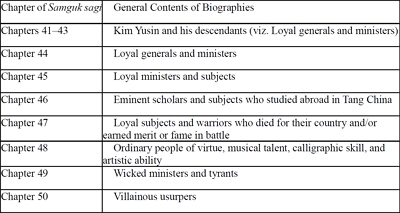
In Korean studies, the prevailing consensus has long been that Kim Pusik’s 金富軾 (1075-1151) Samguk sagi 三國史記narrative is predominantly Confucian, dry, and rational. However, in the 21st century, this view has been vigorously and successfully challenged by scholars who find profound drama and undeniable literary merit in this chronicle. Following this trend, I analyze the methods of creating archetypes in Kim Busik’s narrative, dividing these archetypes into two categories. Along with the obvious “functional” role models reflecting various Confucian virtues and vices, the Samguk sagi also contains more subtle, “hidden” archetypes rooted in a deep mythological consciousness. The biographies of historical figures reflect motifs of Joseph Campbell’s “Hero’s Journey” and the Transformations of the Hero, while unexpected parallels in the structure and narrative of the adventures of the “protagonists” Kim Yusin 金庾信 and “antagonists” Kungye 弓裔 offer intriguing comparisons. The interplay of “functional” and “Campbellian” archetypes throughout the storyline allows for a better appreciation of the literary talent of Kim Pusik and his predecessors, revealing cosmogonic motifs in the presentation of historical events seemingly uncharacteristic of Confucian historiography, and confirming the deeply syncretic nature of ancient and medieval Korean culture, which persisted until at least the 12th century. It can be surmised that Kim Pusik’s historiography did not reject myth perse, but on the contrary, embraced dramatic mythologization of historical figures that enhanced their significance for the history.


 News
News First
First Prev
Prev