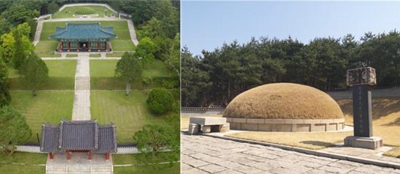
This article examines the formation, transformation, and institutionalization of war memory in Chosŏn Korea through the case of Cho Hŏn (1544–1592) and the Tomb of the Seven Hundred Righteous Martyrs (Ŭich’ong 義塚). While contemporary evaluations of Cho Hŏn 朝憲, the righteous armies (Ŭibyŏng 義兵), and their actions during the Imjin War (1592–1598) were far from uniform, the earliest official account—Yun Kŭn-su 尹根壽’s inscription on the Sunŭibi 殉義碑 (1603)—selected and reorganized particular memories while excluding others. By framing Cho Hŏn and the seven hundred martyrs as embodiments of chŏlŭi 節義 (resolute loyalty unto death), this inscription exerted decisive influence on the subsequent shaping of collective memory.
Rather than adjudicating historical accuracy or military effectiveness, this study focuses on how divergent memories were transformed into authoritative records through commemorative media such as steles, ritual sites, didactic compilations, and state-sponsored rites. Special attention is given to An Pang-jun 安邦俊’s Hangŭi sinp’yŏn 抗義新編 and its illustrated woodblock prints, as well as the compilation of the Tongguk sinsok samgang haengsildo 東國新續三綱行實圖 under King Kwanghaegun 光海君, which visually and textually codified righteous martyrdom as a moral foundation for postwar reconstruction. The article further traces how these selectively reconstructed memories were reinforced through honorific commendations, local ritual practices, and repeated acts of royal recognition, extending into the modern period through state-led heritage restoration.
By situating the Ŭich’ong and the Sunŭibi within a long continuum of remembrance, this study argues that war memory in Chosŏn Korea was neither static nor consensual but actively produced through processes of selection, exclusion, and reconfiguration. Monuments and records functioned not merely as reflections of the past but as instruments that shaped shared perceptions of loyalty, righteousness, and national reconstruction. In highlighting these dynamics, the article underscores the critical role of commemorative practices in transforming fragmented experiences of war into enduring collective memory.


 News
News First
First Prev
Prev