This article investigates the educational philosophy of the 16th-century Korean Neo-Confucian scholar Yi Yulgok (1536-1584), evaluates its contemporary relevance through an analysis of his seminal text, Gyeongmong yogyeol (The Secret to Banishing Ignorance), and concludes with an autoethnographic reflection by the author. This argument is grounded in a methodology that combines textual analysis of Yulgok’s primary writings with biographical-historical contextualization, complemented by autoethnographic reflection on fifteen years of teaching this philosophy to a global student body. The analysis traces this holistic perspective to the foundational influence of Yulgok’s mother, Sin Saimdang, whose progressive pedagogical methods—emphasizing empirical observation and self-directed inquiry—cultivated the pragmatic, interdisciplinary mindset that allowed him to integrate Confucian principles of benevolence (in 仁) and virtue (deok 德) with the practical challenges of statecraft and social ethics. Ultimately, Yulgok's holistic educational model, which inextricably links internal moral cultivation with external public service, offers a potent corrective to the compartmentalization prevalent in modern higher education, advocating for the cultivation of an ethically integrated public intellectual.
This article presents a preliminary comparative study of the cosmopoetics of Lucretius and Liu Xie 劉勰, examining how each articulates a relationship between cosmology and poetic form. Through a comparative reading of De rerum natura and Wenxin diaolong 文心雕龍, it explores the ways in which poetic form is situated within broader frameworks of natural philosophy—Epicurean atomism on the one hand, and cosmological patterning grounded in the Yijing 易經 on the other. Rather than tracing direct influence or thematic correspondence, the study adopts a micro-comparative approach that focuses on analogical structures, figurative practices, and large-scale textual organization. It suggests that in both works, linguistic and poetic form is closely aligned with accounts of cosmic process, complicating conventional distinctions between mimesis and participation. On this basis, the article considers how each author positions the poet, or sage–philosopher-poet, as a mediator between nature and knowledge. The study contributes to ongoing work in Sino-Roman comparative poetics and proposes cosmopoetic form as a useful lens for comparative literary analysis beyond essentialist East–West models.
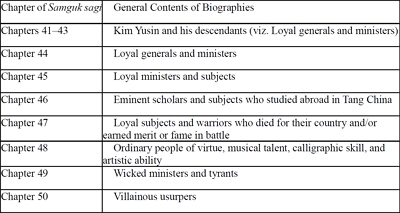
In Korean studies, the prevailing consensus has long been that Kim Pusik’s 金富軾 (1075-1151) Samguk sagi 三國史記narrative is predominantly Confucian, dry, and rational. However, in the 21st century, this view has been vigorously and successfully challenged by scholars who find profound drama and undeniable literary merit in this chronicle. Following this trend, I analyze the methods of creating archetypes in Kim Busik’s narrative, dividing these archetypes into two categories. Along with the obvious “functional” role models reflecting various Confucian virtues and vices, the Samguk sagi also contains more subtle, “hidden” archetypes rooted in a deep mythological consciousness. The biographies of historical figures reflect motifs of Joseph Campbell’s “Hero’s Journey” and the Transformations of the Hero, while unexpected parallels in the structure and narrative of the adventures of the “protagonists” Kim Yusin 金庾信 and “antagonists” Kungye 弓裔 offer intriguing comparisons. The interplay of “functional” and “Campbellian” archetypes throughout the storyline allows for a better appreciation of the literary talent of Kim Pusik and his predecessors, revealing cosmogonic motifs in the presentation of historical events seemingly uncharacteristic of Confucian historiography, and confirming the deeply syncretic nature of ancient and medieval Korean culture, which persisted until at least the 12th century. It can be surmised that Kim Pusik’s historiography did not reject myth perse, but on the contrary, embraced dramatic mythologization of historical figures that enhanced their significance for the history.
This paper explores the discursive strategies adopted by Chosŏn Korea to claim the legacy of Chinese civilization following the fall of the Ming dynasty. Facing the challenge of being a marginal state outside China, Chosŏn intellectuals constructed various narratives to substantiate their inheritance of the orthodoxy of Chunghwa (Central Efflorescence). Historical narratives, reformulated by influential figures like Song Si-yŏl, aimed to establish a direct bond of Confucian loyalty between the Chosŏn people and the Ming emperors. Simultaneously, geographic and historiographical discourses sought to validate the continuity between Chosŏn and the Ming, emphasizing their shared civilizational terrain. However, the introduction of Western geographical knowledge destabilized the notion of China’s centrality, posing a threat to the legitimacy of Chosŏn-Chunghwa. This challenge precipitated a shift toward a cultural-universalist approach, prioritizing the individual’s capacity to practice Confucian ethics over the strict adherence to external rituals and customs. By examining these evolving strategies and debates, this paper sheds light on Chosŏn’s struggle to negotiate its marginality while asserting itself as the rightful successor to Chinese civilization.
This article examines the formation, transformation, and institutionalization of war memory in Chosŏn Korea through the case of Cho Hŏn (1544–1592) and the Tomb of the Seven Hundred Righteous Martyrs (Ŭich’ong 義塚). While contemporary evaluations of Cho Hŏn 朝憲, the righteous armies (Ŭibyŏng 義兵), and their actions during the Imjin War (1592–1598) were far from uniform, the earliest official account—Yun Kŭn-su 尹根壽’s inscription on the Sunŭibi 殉義碑 (1603)—selected and reorganized particular memories while excluding others. By framing Cho Hŏn and the seven hundred martyrs as embodiments of chŏlŭi 節義 (resolute loyalty unto death), this inscription exerted decisive influence on the subsequent shaping of collective memory.
Rather than adjudicating historical accuracy or military effectiveness, this study focuses on how divergent memories were transformed into authoritative records through commemorative media such as steles, ritual sites, didactic compilations, and state-sponsored rites. Special attention is given to An Pang-jun 安邦俊’s Hangŭi sinp’yŏn 抗義新編 and its illustrated woodblock prints, as well as the compilation of the Tongguk sinsok samgang haengsildo 東國新續三綱行實圖 under King Kwanghaegun 光海君, which visually and textually codified righteous martyrdom as a moral foundation for postwar reconstruction. The article further traces how these selectively reconstructed memories were reinforced through honorific commendations, local ritual practices, and repeated acts of royal recognition, extending into the modern period through state-led heritage restoration.
By situating the Ŭich’ong and the Sunŭibi within a long continuum of remembrance, this study argues that war memory in Chosŏn Korea was neither static nor consensual but actively produced through processes of selection, exclusion, and reconfiguration. Monuments and records functioned not merely as reflections of the past but as instruments that shaped shared perceptions of loyalty, righteousness, and national reconstruction. In highlighting these dynamics, the article underscores the critical role of commemorative practices in transforming fragmented experiences of war into enduring collective memory.
This paper aims to introduce the Suryǒm ch’ǒngjǒng chǒlmok 垂簾聽政節目 (Regulations for Queen Dowager Regency) from nineteenth-century Chosǒn, as recorded in the Chosǒn wangjo sillok 朝鮮王朝實錄 and Sŭngjŏngwŏn ilgi 承政院日記, with the goal of providing a comprehensive English-language translation and analyzing the characteristics of the regulations. The Suryǒm ch’ǒngjǒng chǒlmok standardized the procedure for suryǒm ch’ǒngjǒng 垂簾聽政 (queen dowager regency), authorizing queen dowagers to assume a public role during the minority or unpreparedness of a king, which marked the only period in which women were legally and directly involved in court politics. This paper will analyze each regulation from the 1800 promulgation of the Suryǒm ch’ǒngjǒng chǒlmok for Queen Dowager Chŏngsun’s 貞純王后 (1745-1805) regency for King Sunjo 純祖 (1790-1834) and identify the amendments to the regulations during the later queen dowager regencies. The regulations allowed the queen dowagers to be involved in court politics within established bounds, covering a range of procedures from where the queen dowager could sit in court, how to give orders and how the king could turn to the queen dowager for advice. The regulations established the procedure for regency with the purpose of encouraging the joint governance between the queen dowager and the king, which coincided with the king’s education during the regency period. The Suryǒm ch’ǒngjǒng chǒlmok is significant to studies on the queen dowagers and the institutional history of the Chosǒn dynasty because it codified queen dowager regency, officially authorizing them to assume a public and political role, albeit temporarily.




 News
News First
First Prev
Prev